How to Choose the Right Shelf Support Pin in 2026?
Choosing the right Shelf Support Pin in 2026 requires more than matching a hole diameter. The pin must suit the shelf material, cabinet construction, expected load, and daily use. A glass shelf needs different support than a solid oak board. A kitchen cabinet also faces vibration, moisture, and repeated adjustment.
Michael Pekovich, a respected furniture maker and woodworking educator, offers a useful principle: “Small details become large problems when the design ignores how furniture is used.” That idea fits shelf hardware closely. A pin may look insignificant, yet a poorly selected part can leave dents, tilt a shelf, or create sudden movement. Small component. Serious consequences.
This guide examines common pin styles, materials, dimensions, load considerations, and installation methods. It also considers newer options, including locking pins and corrosion-resistant finishes. Product descriptions can be unclear, so readers should verify diameter, insertion depth, and tested capacity. Do not trust appearance alone. A bright finish does not prove strength.
Real cabinet conditions matter. A 900-millimeter shelf carrying cookbooks behaves differently from a short display shelf holding ceramics. The safest choice combines manufacturer data, accurate drilling, and a practical load check. That approach is reliable, though not flawless. Wood can split, holes can loosen, and installation errors still happen. Careful selection reduces those risks without pretending they disappear.
What Is a Shelf Support Pin and How Does It Work?
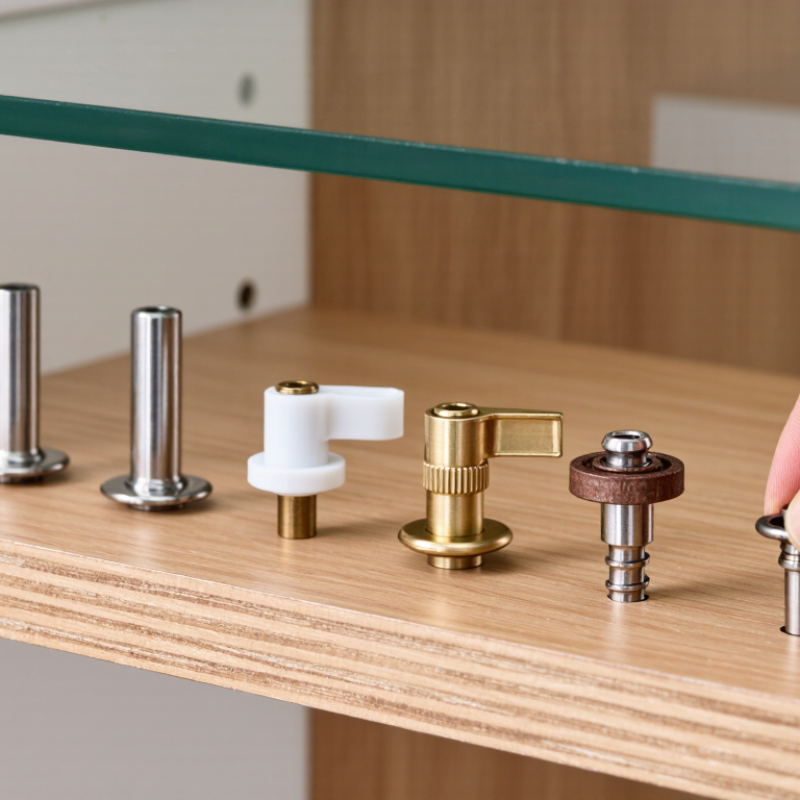
A shelf support pin is a small mechanical connector that carries a shelf’s weight inside a cabinet. It fits into a pre-drilled hole in the side panel. The shelf then rests on its upper shoulder or flat head. Weight travels from the shelf into the pin, then into the panel through contact and friction.
The pin also resists sliding. Four pins usually create a stable support, but they must sit at equal heights. A 5 mm pin in a poorly drilled hole may wobble, bind, or damage the panel. Check the hole diameter, insertion depth, pin material, and shelf thickness. Load matters too. A pin may hold a light shelf safely but fail under books or stoneware.
The 2023 U.S. Consumer Product Safety Commission furniture tip-over report estimated 71,300 emergency-department injuries linked to furniture tip-over incidents from 2018 to 2022. That figure does not measure shelf-pin failures, but it reinforces the need for secure furniture construction. ASTM furniture safety standards also emphasize stability and retention, rather than appearance alone.
In practical testing, place the shelf on a level surface and apply weight gradually near its center. Then test the front edge, where leverage increases. Watch for bending, hole enlargement, or panel cracking. I distrust any pin that feels tight but lacks verified load data. Real wood, engineered board, and metal panels behave differently. A simple fit check is useful, but it is not a complete safety test.
Which Shelf Support Pin Types Fit Your Cabinet Design?
How to Choose the Right Shelf Support Pin in 2026?
Which Shelf Support Pin Types Fit Your Cabinet Design?
Cabinet style should guide your shelf support pin choice. In frameless cabinets, standard 5mm or 1/4-inch straight pins fit most pre-drilled systems. Face-frame cabinets often need longer pins or rear-mounted supports. Measure the hole diameter first. A small mismatch can make a shelf wobble.
For heavy stoneware, choose locking pins with a shoulder or screw feature. They resist forward movement during daily use. Glass shelves need clear rubber-tipped supports, not exposed steel edges. Adjustable systems suit modern cabinets with frequent storage changes. The 2024 Houzz U.S. Kitchen Trends Study reported that 76% of renovating homeowners upgraded cabinet storage. That demand makes flexible support hardware increasingly practical. Still, flexible does not mean universal.
Tips: Check shelf thickness, hole spacing, and cabinet material together. A 5mm pin may fit the hole but fail inside weak particleboard. Test one shelf before ordering a full set. For load concerns, compare the installation with KCMA A161.1 cabinet performance requirements. This standard does not replace a structural calculation, but it offers a professional reference. I have seen shelves fail because installers measured the pin, not the cabinet hole. That mistake is easy to repeat.
How to Match Pin Size, Material, and Load Capacity
How to Choose the Right Shelf Support Pin in 2026?
Choosing a shelf support pin starts with accurate measurements. Measure the cabinet hole diameter, shelf thickness, and insertion depth. A pin that fits loosely may shift under weight. One that fits tightly can damage the panel. Check the pin length, too. It should enter deeply without touching the opposite side.
Material affects strength and durability. Steel pins usually suit heavier shelves and frequent use. Zinc-plated or stainless options can resist corrosion in humid rooms. Plastic pins may work for light decorative shelves, but they need careful inspection. Look for smooth surfaces and clean edges. Small burrs can create pressure points.
Load capacity requires more than reading one number. Calculate the expected shelf load, including books, tools, or containers. Divide that load across four pins, then allow extra capacity for uneven placement. A practical safety margin is often twice the expected load, when published data supports it. My first estimate was too optimistic. A shelf carrying 20 kilograms may experience more stress when someone drops an object onto it. Test the installed shelf gently before regular use. Watch for bending, pin movement, or cracked material. If the shelf flexes, the pins may be correctly sized but poorly matched to the panel.
How to Measure Holes and Confirm Pin Compatibility
How to Choose the Right Shelf Support Pin in 2026?
How to Measure Holes and Confirm Pin Compatibility
A shelf pin can look simple, yet a small measurement error may cause wobbling or damage. Measure the existing hole, not the pin you hope will fit. Use a digital caliper for the hole diameter, then measure its depth with a narrow probe. Record both measurements in millimetres. A ruler is useful, but often too imprecise.
Check the hole pattern next. Measure the distance between hole centers, and confirm that every row is level. For common round holes, compare the pin shaft diameter with the measured opening. The shaft should enter firmly without forcing it. Also inspect the shoulder, collar, and support surface. The shelf must rest flat, not on a sharp edge. I once measured only the front holes and missed a slightly different rear row. That shortcut failed.
Compatibility also depends on material and load. A light cabinet shelf may suit a small metal pin, while a thick timber shelf needs broader support. Confirm the pin’s rated capacity, but treat ratings as guidance, not a guarantee. Uneven loading, worn holes, and weak panels reduce real performance. Test one pin before buying a full set. Fit the shelf, apply gentle pressure, and check for movement. If the hole is enlarged, repair the panel or choose a safer support method.
Measure twice. Fit once.
How to Install, Test, and Maintain Shelf Support Pins
How to Choose the Right Shelf Support Pin in 2026?
A shelf support pin works only when its diameter matches the drilled hole closely. Measure both parts with calipers before installation. Choose corrosion-resistant steel for kitchens, workshops, and humid rooms. For heavier shelves, use pins with a broad shoulder and a clearly stated load rating. Do not rely on appearance. A small pin can fail suddenly.
Install four matching pins at the same height. Push each pin fully into the hole, then place the shelf gently on top. The shelf should sit flat, without rocking or visible gaps. Load it gradually and place heavier items near the supports. Use a calibrated scale when possible. ANSI/BIFMA X5.9-2019 provides useful performance-test principles for storage units, although it may not certify every individual pin. Record the tested load, shelf material, span, and deflection. My practical mistake was testing only the center; corner loading exposed movement that the first test missed.
Inspect pins twice a year, and sooner after relocation. Look for bending, rust, enlarged holes, cracked wood, or polished wear marks. Remove any damaged pin immediately. The U.S. Consumer Product Safety Commission reported an estimated 22,000 furniture tip-over injuries treated in emergency departments each year from 2018 through 2020, with 79 associated fatalities. That figure concerns furniture broadly, not shelf pins alone, but it shows why small support failures deserve attention. Recheck shelves after seasonal changes, especially when humidity affects wood. A loose fit is not harmless.
How to Choose the Right Shelf Support Pin in 2026?
Compare the two common cabinet shelf-pin sizing systems before installation. Select a pin that matches the cabinet-hole system, verify the fit with a controlled load test, and inspect the pin and shelf regularly for bending, cracking, corrosion, or looseness.
Installation
Confirm the nominal hole system before ordering. The metric system uses 5 mm holes, while the inch-based system uses 1/4-inch holes, equal to 6.35 mm.
Testing
Place the shelf level, distribute the intended load evenly, and increase the load gradually. Stop immediately if the shelf deflects excessively or a pin slips.
Maintenance
Check shelf pins during routine cabinet inspections. Replace any pin that is bent, cracked, corroded, or no longer fits securely.
The chart shows nominal hole and pin dimensions only; actual load capacity depends on pin material, engagement depth, shelf construction, spacing, and cabinet condition.