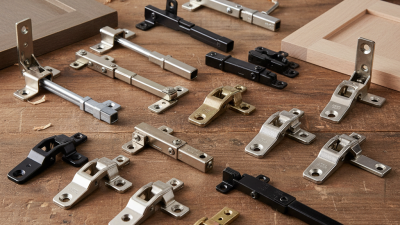
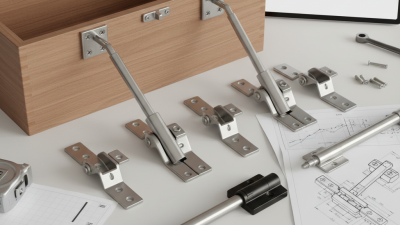
Choosing Lid Support Hinges for global sourcing requires more than comparing unit prices. A hinge may look identical in a product photograph, yet behave differently under heat, vibration, or repeated opening. The right choice protects the lid, the user, and the supply plan. Small details matter.
According to Martin Keller, an industrial hardware engineer with over two decades of cabinet and enclosure experience, “A lid hinge is successful only when its movement, strength, and environment are tested together.” That principle should guide every sourcing decision. Buyers should review opening angle, holding torque, lid weight, mounting space, cycle life, and material grade. Stainless steel may suit humid locations. Zinc-plated steel may reduce cost in controlled interiors. Powder-coated parts can improve appearance, but damaged edges still deserve attention.
Ask suppliers for drawings, tolerance data, test methods, and production samples. Do not rely on a polished catalog image. Measure the hinge on a real lid, using the intended screws and panel thickness. Check whether the lid stays open at the required angle. Repeat the movement hundreds or thousands of times. Watch for loosened fasteners, surface wear, noise, and uneven resistance.
Global sourcing adds practical concerns. Packaging must prevent bent arms and scratched finishes. Factory quality records should identify batch numbers and inspection results. Communication can fail across time zones. Plan for it. A second approved supplier may reduce disruption, although it can increase qualification work.
Even experienced teams make poor selections when prototypes are rushed. A spreadsheet cannot reveal every failure. The best process combines engineering evidence, supplier transparency, field experience, and honest review of what remains uncertain.
Lid support hinges control how a cover opens, pauses, and closes. They reduce sudden drops and make everyday handling safer. The basic structure usually includes a hinge joint, support arm, mounting plate, and friction or spring mechanism. Each part affects movement.
In sourcing work, I check the lid weight, center of gravity, opening angle, and available mounting space. A light wooden lid may need simple friction support. A heavier metal cover may require stronger torque and reinforced mounting points. Small details matter. Screw position can change the load significantly. I have seen hinges pass a basic opening test but loosen after repeated cycles.
Material selection also deserves attention. Zinc alloy can offer a solid feel, while stainless steel suits humid environments better. Coatings should resist wear around moving joints. Ask suppliers for load ratings, cycle-test results, dimensional drawings, and tolerance data. Test samples with the real lid, not only a catalog model. Measure twice. My earlier mistake was judging support by static weight alone. Movement, vibration, and uneven installation exposed the weakness later. A reliable specification should state torque, tested cycle count, mounting method, and acceptable closing force. These details make comparisons clearer across global suppliers.
Choosing lid support hinges for global sourcing starts with three measurable facts: lid weight, opening angle, and load behavior.
Do not estimate weight by appearance. Measure the complete lid, including glass, trim, insulation, locks, and attached cables. Record the center of gravity, because a heavy handle can shift the force forward.
For a 12-kilogram lid with its center 0.45 meters from the hinge, the static moment is about 53 newton-meters.
Opening angle changes both usability and hinge stress. A lid stopping at 95 degrees may clear the user’s hands, while a 110-degree opening may strike a rear wall. Define the required angle with a physical mock-up, not only a drawing.
Check the final 10 degrees slowly. That is where binding often appears.
Load requirements need more than the lid’s own mass. Include wind, vibration, repeated slamming, uneven mounting, and operator force. For sourcing, specify holding torque, operating temperature, cycle count, corrosion resistance, and mounting tolerance.
Ask suppliers for test data and a clear safety factor.
I once selected a hinge from nominal weight alone. It worked on the bench, then sagged after repeated cycles. The missing detail was an offset latch. That mistake changed my practice.
Now I calculate torque at the weakest position. Then I add a realistic margin, often 1.5 to 2 times the measured working load.
Still, this is not universal. Temperature and installation errors can reduce performance.
Before approving a production sample, cycle it with the actual lid, fasteners, seals, and stop position. Small testing details prevent expensive sourcing surprises.
Small lids differ. A compact electronics cover may need a concealed hinge, while a wide storage lid benefits from a continuous piano hinge. Compare the lid weight, panel thickness, opening angle, and expected cycle life before requesting quotations. In practical sourcing work, hinge failure often begins with poor load distribution, not the hinge alone.
Friction hinges hold a lid at selected angles without extra stays. They suit display covers, access panels, and lightweight equipment lids. Torque hinges provide stronger resistance but require accurate torque calculations. Too much torque can distort thin panels. Spring-assisted hinges reduce lifting effort for heavier lids, yet they may create sudden movement if incorrectly matched. Test it.
For outdoor or humid applications, material and surface protection deserve close review. Stainless steel supports corrosion resistance, while coated steel can offer a cost-conscious option in controlled environments. Concealed hinges improve appearance and protect moving parts, but installation tolerances become stricter. Removable hinges help maintenance teams, although loose alignment can produce rattling.
Ask suppliers for load curves, cycle-test data, dimensional drawings, and sample approval procedures. A reliable comparison should include screws, mounting plates, and the actual lid material. Laboratory figures may not reflect dust, vibration, or uneven assembly. I once underestimated a soft lid panel; the hinge passed testing, but the panel cracked around the fasteners. The lesson remains useful: evaluate the complete lid system, not only the hinge body.
When sourcing lid support hinges across markets, material selection should begin with the lid, not the catalog. Steel suits heavy covers and repeated cycles. Stainless steel handles moisture better. Aluminum reduces weight, but its lower stiffness may change the support feel. Pair dissimilar metals carefully. A humid coastal warehouse can expose weak plating within months. Request material grades, surface treatments, and batch traceability from each supplier. Do not rely on a polished sample alone.
Safety depends on movement control as much as load capacity. A hinge may hold a 15-kilogram lid statically yet fail during a sudden release. Check torque across the full opening angle. Look for controlled closing, hold-open stability, and protection against pinching. Some designs need a secondary retention feature if the primary hinge loosens. Test with the actual lid, handle, gasket, and latch installed. Small changes can alter balance. Cycle testing should include misalignment, vibration, and repeated impact. Photograph failures and record the opening force.
Operating conditions often expose assumptions hidden in drawings. Specify temperature range, dust, humidity, cleaning agents, and expected daily cycles. For outdoor equipment, salt spray and ultraviolet exposure may matter. For refrigerated cabinets, cold-rated lubrication and brittle seals deserve attention. Ask for dimensional tolerances, torque curves, inspection plans, and test methods. Independent verification improves confidence, especially when production moves between factories. Still, paperwork cannot replace a pilot installation. A hinge that passed the lab may feel too stiff on the assembly line. That uncomfortable finding should trigger redesign, not concealment.
Choosing lid support hinges for global sourcing starts with supplier verification, not a low quotation. Request a current factory profile, production photos, inspection records, and traceable material certificates. The ISO Survey 2023 reported more than 1.2 million ISO 9001 certificates worldwide, but certification alone cannot prove hinge performance. Ask whether the supplier controls spring force, hole position, surface treatment, and cycle testing. A useful sample should match the final steel grade, finish, and installation method. Test it on the real lid.
Standards must fit the application. Check dimensional tolerances, corrosion resistance, load capacity, and repeated opening cycles. For export products, review applicable chemical and material requirements, such as RoHS or REACH, with written evidence. Do not trust a sample that feels smooth for five minutes. Test it under the lid’s actual weight, temperature, and vibration. The weak point may be the mounting screw, not the hinge. That detail is easy to miss.
Shipping terms need equal attention. UNCTAD’s Review of Maritime Transport states that over 80% of global merchandise trade moves by sea, so packaging and schedule buffers matter. Compare FCA, FOB, CIF, and DDP carefully; responsibilities for freight, insurance, customs, and risk change with each term. The World Bank Logistics Performance Index 2023 also highlights reliability as a major logistics concern. Confirm carton dimensions, moisture protection, pallet rules, and inspection timing before payment. A perfect hinge arriving late is still a sourcing failure. Improvement remains possible.
| Category | Evaluation Dimension | Recommended Requirement or Benchmark | Verification Evidence | Global Sourcing Decision |
|---|---|---|---|---|
| Supplier Verification | Legal and manufacturing identity | Confirm the legal entity, factory address, production scope, export registration, and ownership of the manufacturing site. | Business registration, factory address record, production photos, video audit, and third-party or buyer audit report. | Use only suppliers whose legal entity and production location match the quotation and contract. |
| Quality management system | An ISO 9001:2015 certificate is preferred; verify that the certificate scope covers metal hardware, hinges, furniture fittings, or related products. | Certificate number, issuing body, validity dates, scope, and online certificate verification where available. | Treat certification as evidence of a management system, not as proof that every hinge design meets the required load rating. | |
| Production capability | Confirm stamping, machining, riveting, spring installation, surface finishing, assembly, and inspection capacity relevant to the selected hinge type. | Process flow chart, equipment list, monthly capacity, subcontractor list, and inspection-point records. | Separate design ownership from actual manufacturing capability before approving the supplier. | |
| Traceability and corrective action | Each production lot should be traceable to raw material, production date, operator or line, inspection result, and packaging batch. | Lot coding procedure, incoming inspection records, nonconformance reports, and corrective-action examples. | Require documented containment and root-cause action for failed samples or field complaints. | |
| Capacity and lead time | Obtain separate lead times for tooling, first samples, production, inspection, and shipping. Avoid relying on one combined estimate. | Capacity plan, production schedule, holiday calendar, historical on-time delivery data, and approved production lead-time clause. | Use a contingency period for tooling changes, port congestion, customs clearance, and inspection delays. | |
| Technical Selection | Lid weight and center of gravity | Specify lid mass, lid width and depth, mounting position, opening angle, and approximate center-of-gravity distance from the pivot. | Dimensioned drawing, lid mass measurement, mounting layout, and torque calculation or supplier selection chart. | Do not select by lid weight alone; torque requirements change with geometry and mounting position. |
| Support torque and safety margin | Specify required holding or assist torque in N·m. A practical preliminary design margin is commonly 20–30%, subject to physical testing. | Torque-versus-angle data, calculation sheet, test method, and sample test results at the intended mounting position. | Reject products that hold only at one angle or require excessive manual force near the closed position. | |
| Opening angle and motion control | Define the required opening angle, stop position, closing speed, and whether free-stop, friction, spring-assist, or soft-closing action is needed. | Opening-angle drawing, motion test video, measured closing time, and stop-load test record. | Use a dedicated lid stay or damper when uncontrolled closing could create a pinch or impact hazard. | |
| Material and corrosion resistance | Common materials include carbon steel, stainless steel, zinc alloy, and aluminum. Select material and finish according to humidity, salt exposure, and indoor or outdoor use. | Material declaration, coating specification, thickness or grade record, and corrosion test report where required. | For coastal or high-humidity applications, request a corrosion-resistant material or validated coating rather than relying on color alone. | |
| Chemical and regulatory compliance | For products entering the EU, review REACH Regulation (EC) No 1907/2006 and RoHS Directive 2011/65/EU when the hinge is part of electrical or electronic equipment. Apply other destination-country rules as relevant. | Material composition declaration, restricted-substance statement, supplier compliance declaration, and laboratory report when contractually required. | Define the applicable regulation by product end use and destination; do not request irrelevant certificates as a substitute for testing. | |
| Dimensional interchangeability | Control mounting-hole pitch, hole diameter, hinge thickness, pivot position, bracket geometry, and allowable dimensional tolerances. | 2D or 3D drawing, critical-to-function dimensions, gauge records, and first-article inspection report. | Mark critical dimensions on the purchase specification and approve any engineering change in writing. | |
| Sample Approval | Sample stages | Use a staged process: initial design sample, revised engineering sample, pre-production sample, and production reference sample. | Signed sample approval record, approved drawing, sample photographs, and retained reference parts. | Do not authorize mass production until the pre-production sample matches the final drawing and performance criteria. |
| Functional testing | Test opening and closing movement, holding force, noise, looseness, stop performance, screw or rivet security, and visible deformation. | Buyer-witnessed test, test video, measured force or torque values, and signed test report. | Test the complete lid assembly, because hinge performance depends on lid mass, mounting structure, and fasteners. | |
| Cycle-life requirement | Set a cycle target based on application frequency. For commercial or frequently used lids, a buyer-defined target such as 10,000 cycles may be used as a qualification benchmark, not as a universal standard. | Cycle-test method, load and speed conditions, failure definition, pre-test and post-test measurements, and test photographs. | Compare suppliers only when cycle count, load, angle, speed, and acceptance criteria are identical. | |
| Packaging and identification | Protect finished surfaces from abrasion and moisture; identify part number, quantity, lot, country of origin, and handling information where required. | Packaging sample, carton dimensions, gross and net weight, drop-test requirement if applicable, and label artwork. | Approve packaging before shipment to reduce corrosion, mixed-lot, and customs-document discrepancies. | |
| Shipping and Trade Terms | Recommended Incoterms® 2020 options | FCA is often suitable for containerized or multimodal shipments; FOB is commonly used for sea shipments when the seller delivers on board; DAP or DDP may be considered when the buyer needs delivered service and the tax structure is clear. | Quotation showing named place or port, Incoterms® 2020 rule, freight scope, export clearance, import clearance, duties, and taxes. | Always state the exact named place or port. “FOB” or “DDP” without a location is incomplete. |
| Shipment mode and planning range | Typical planning ranges are approximately 3–7 days for air express, 1–3 weeks for air freight, and 4–8 weeks for ocean transport, excluding production and customs delays. | Forwarder quotation, routing, sailing or flight schedule, cargo-ready date, and customs documentation checklist. | Use actual carrier schedules for the route and season; transit ranges are planning estimates, not guaranteed delivery dates. | |
| Export and import documents | Prepare commercial invoice, packing list, transport document, purchase order, certificate of origin when required, and any destination-specific compliance documents. | Draft documents submitted for review before shipment; consistent product description, quantity, value, tariff classification, and country of origin. | Align the commercial description and tariff classification with the customs broker before cargo departure. | |
| Freight cost and shipment density | Compare unit price together with tooling, packaging, inspection, inland transport, freight, insurance, duties, and destination handling charges. | Landed-cost worksheet using carton count, carton dimensions, gross weight, chargeable weight, and shipment frequency. | Choose the shipping method based on total landed cost and required delivery date, not product price alone. | |
| Insurance and risk transfer | Define who arranges cargo insurance, the coverage value, claim process, damage evidence, and responsibility transfer under the selected Incoterms® 2020 rule. | Insurance certificate or policy, transport contract, loading photographs, seal record, and claim procedure. | Confirm the risk-transfer point separately from the point where freight costs are paid. | |
| Commercial Control | Tooling and engineering-change ownership | The purchase agreement should define tooling ownership, storage, maintenance, permitted use, return or destruction, and approval of design changes. | Tooling invoice, asset list, signed ownership clause, change-control procedure, and revision-controlled drawings. | Prevent unapproved material, geometry, finish, or subcontractor changes after sample approval. |
| Inspection and acceptance level | Define critical, major, and minor defects; specify inspection method, sample size, measurement tools, and acceptance criteria in the purchase order. | Inspection plan, approved limit samples, dimensional report, functional test report, and agreed nonconformance process. | Use pre-shipment inspection for new suppliers, new tooling, or high-risk performance requirements. | |
| After-sales support and warranty | Agree response time, replacement or credit terms, failure analysis, spare-part availability, and warranty start point. | Written warranty clause, complaint-response workflow, corrective-action template, and replacement lead time. | Select the supplier offering the clearest technical accountability, not merely the lowest quotation. |