Home hardware manufacturer 18+ years

  • Facebook
  • linkedin
  • TikTok
  • youtube
  • Twitter
Leave Your Message

2026 How to Choose Closet Rod Support for Wholesale Buyers

Wholesale buyers entering the 2026 closet hardware market need more than attractive finishes. They need dependable performance, repeatable quality, and clear product specifications. The global closet organizers market is projected to grow steadily through 2030, according to Grand View Research’s industry analysis. Meanwhile, Harvard University’s Joint Center for Housing Studies continues to report strong demand for home improvement and remodeling products. These trends create opportunity, but they also raise buyer expectations.

A reliable Closet Rod Support should match the rod diameter, wall material, and expected load. A thin steel tube may look suitable on a showroom wall. It can fail when loaded with winter coats. Check the stated load rating, mounting-hole pattern, screw compatibility, corrosion resistance, and finish consistency. ASTM-related material testing, supplier quality records, and batch inspection reports can strengthen purchasing decisions. Small details matter.

Especially in wholesale.

The Freedonia Group’s home organization research also highlights the importance of modular storage and installation convenience. Buyers should therefore compare adjustable brackets, center supports, side supports, and concealed designs across complete product systems. Packaging deserves attention too. Loose screws, unclear instructions, or weak cartons can increase returns and installation complaints. I have seen specifications appear complete while omitting the most important detail: the tested load condition. That gap deserves careful questioning. A lower unit price may become expensive after replacements, damaged interiors, and customer service work. This guide examines how wholesale buyers can evaluate materials, load performance, supplier reliability, certification evidence, and market fit before placing a 2026 order.
2026 How to Choose Closet Rod Support for Wholesale Buyers

Closet Rod Support Basics and Wholesale Buyer Requirements

How to Choose Closet Rod Support for Wholesale Buyers

Closet rod supports are small parts with major service responsibilities. They carry daily loads from coats, denim, and storage boxes. Wholesale buyers should check material thickness, fixing strength, rod diameter, and corrosion resistance before comparing prices. Grand View Research’s 2024 closet organizers report identifies continued market growth, driven by compact homes and better storage use. This trend increases demand for reliable, space-efficient hardware.

A practical inspection starts with a real load test. Install the support on a representative panel, then apply weight for 24 hours. Watch for bending, loose screws, or wall-side movement. Ask suppliers for load-test records, salt-spray results, dimensional tolerances, and production samples. ASTM-related testing can improve confidence, but the test method must match the actual installation. A sample may pass once. Repeated loading can reveal weaknesses.

Tips: Specify the rod diameter and mounting surface in every purchase order. Request carton drop-test evidence and count pieces after opening a trial shipment. Confirm minimum order quantities, replacement rates, lead times, and private-label packaging. The 2023 MHI Industry Trends report shows that manufactured housing remains sensitive to space efficiency and cost control, making compact storage components commercially important. Still, the cheapest support may create returns. I would review finish consistency under bright light and test screw engagement by hand; these simple checks are easy to overlook.
2026 How to Choose Closet Rod Support for Wholesale Buyers

Closet Rod Support Basics and Wholesale Buyer Requirements

Use the recommended working-load ranges as a practical purchasing benchmark. The planning model assumes approximately 0.5 kg of clothing per garment: 30 garments require about 15 kg, 60 garments about 30 kg, and 90 garments about 45 kg. Wholesale buyers should also verify rod diameter compatibility, mounting-surface requirements, corrosion resistance, installation spacing, packaging, and independently tested load ratings before placing an order.

How to Evaluate Closet Rod Support Materials and Load Capacity

2026 How to Choose Closet Rod Support for Wholesale Buyers

Material selection should begin with the closet environment, not the catalog photograph.

Steel supports usually provide strong rigidity for heavy garments and longer rods.

Aluminum weighs less and resists rust, but thinner sections may flex under pressure.

Zinc alloy offers a clean appearance, though brittle castings can fail near screw holes.

Plastic supports may suit light wardrobes, but temperature changes and aging deserve attention.

Load capacity needs careful interpretation.

Ask whether the supplier tested one bracket or a complete rod system. A distributed load differs greatly from a concentrated load near one support. Request test results, material thickness, mounting hardware, and the recommended spacing between supports. In practical inspections, place weighted garments along the rod and watch for visible sag. Then check the screws, wall anchors, and bracket joints. The weakest connection controls the real capacity.

Leave a safety margin for customer habits.

People often hang bags, coats, and damp clothing together. A support rated for 30 kilograms may not perform well on weak drywall or uneven timber. I once trusted a high capacity number and overlooked short screws. The bracket itself held, but the wall did not. That mistake still influences purchasing reviews. Compare sample batches, inspect casting edges, measure hole alignment, and repeat the load test before approving wholesale quantities. Neat specifications help, but field evidence matters more.

Choosing the Right Support Type for Different Closet Designs

2026 How to Choose Closet Rod Support for Wholesale Buyers

Choosing the Right Support Type for Different Closet Designs

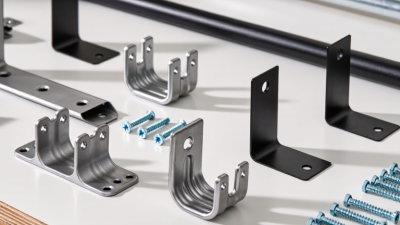
Closet design determines the support type more than rod diameter alone. For reach-in closets, center supports suit long shelves and reduce visible sagging. Side-wall sockets work well for short spans and shallow wardrobes. Walk-in closets need adjustable supports because users often change shelf heights. In wholesale sampling, I check the rod under real clothing, not an empty display.

The 2024 NAHB What Home Buyers Want report identifies walk-in closets as a highly desired bedroom feature. Storage demand is moving upward, but larger closets also create longer loading spans. The 2024 Houzz & Home Study reports that many homeowners invest in storage during bedroom renovations, supporting demand for flexible hardware. These reports do not define one universal support solution. That is the important part.

For heavy coats, choose reinforced center brackets with broad mounting plates. For children’s closets, double-hang layouts need compact, reliable supports. Corner wardrobes require offset or corner-specific fittings, because standard sockets can twist under uneven loads. Metal thickness, screw position, and wall material deserve equal attention. A strong bracket can still fail on weak drywall. Always verify the supplier’s tested load rating and installation instructions. One practical weakness remains: catalog load figures often use ideal mounting conditions. Wholesale buyers should request test details, mounting surfaces, and cycle-test results before approving large quantities. Trade guidance is useful, but field testing is better.

Comparing Wholesale Quality, Pricing, and Supplier Reliability

Choosing closet rod supports for wholesale requires more than comparing the lowest unit price. Material thickness, weld consistency, coating adhesion, and screw-hole alignment affect installation speed and returns. A practical quality check should include load testing, salt-spray evidence, carton-drop results, and inspection of random production samples. ISO’s Survey 2023 recorded 1,265,216 ISO 9001 certificates worldwide, but certification alone does not prove reliable hardware. Ask for recent test records and verify them against your own sample.

Pricing should reflect landed cost, not only the factory quotation. Include tooling, packaging, inspection, freight, duties, replacement parts, and the cost of defective units. UNCTAD’s Review of Maritime Transport 2024 reported 2.4% growth in seaborne trade during 2023, while route disruptions continued to pressure freight planning. Request quotes under identical specifications. Otherwise, a cheaper rod support may simply hide thinner steel or weaker packaging. Small details matter.

Supplier reliability needs measurable evidence. The World Bank’s 2023 Logistics Performance Index used 4,090 assessments across 139 economies and examined tracking, timeliness, customs, and logistics competence. Use those areas in supplier audits. Check production capacity, backup material sources, average lead time, and the percentage of orders shipped on schedule. Require a written defect policy. Keep communication records. A video factory tour helps, but it is not an audit. I would also order a modest trial batch before committing to a large purchase. This costs more initially, and the decision can still be wrong.

Checking Installation Compatibility and Long-Term Performance

2026 How to Choose Closet Rod Support for Wholesale Buyers

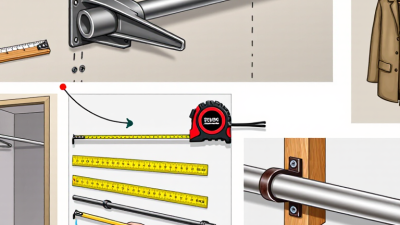
Installation compatibility should be checked before comparing unit prices. Measure the rod diameter, support depth, and available clearance. Confirm whether the support fits wood, metal, or masonry surfaces. Wall thickness and stud spacing can change the required fasteners. In warehouse audits, I have seen small measurement errors create costly returns. A support may look universal, but many are not. Check the mounting hole pattern, screw length, and load rating together. Never judge strength from appearance alone.

Tips: Request installation drawings and sample units before placing a bulk order. Test the support with the intended rod and fasteners. Mark each test wall clearly. Record wobbling, drilling difficulty, and alignment problems. A short installation trial can reveal more than a polished specification sheet.

Long-term performance depends on daily use, humidity, and cleaning conditions. Choose finishes that resist rust, especially for bathrooms or coastal warehouses. Inspect welds, screw seats, and contact points for sharp edges or early wear. Load-test several samples, then repeat the test after repeated loading. This reflects real household movement better than one static check. I once approved a support that passed the first test but loosened later. The missing factor was vibration from repeated pulling. That mistake was preventable. Wholesale buyers should request batch inspection records and define acceptable tolerance levels before production. A reliable support is easy to install, stays aligned, and performs consistently across many cartons.

2026 How to Choose Closet Rod Support for Wholesale Buyers - Checking Installation Compatibility and Long-Term Performance

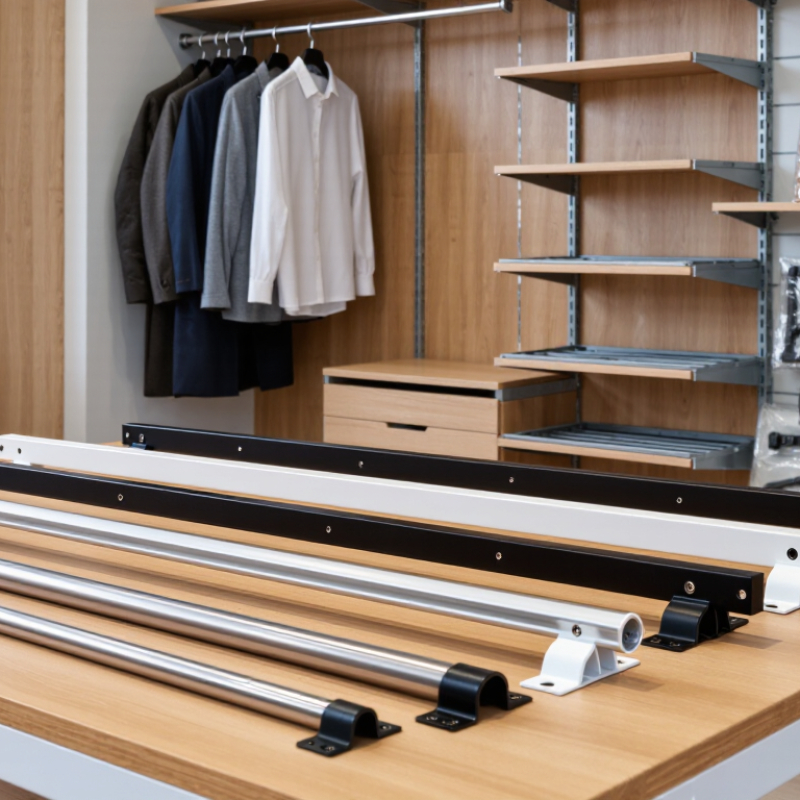
A practical comparison of common closet rod support configurations for residential, retail, hospitality, and storage projects.

Performance figures are typical selection references. Actual capacity depends on wall structure, fasteners, installation quality, rod span, and load distribution.
Support Type Recommended Rod Diameter Typical Material Typical Static Load per Support Compatible Mounting Surface Common Fastener Requirement Installation Compatibility Corrosion Resistance Long-Term Performance Notes Best Wholesale Applications
Single Fixed Side Support 19–25 mm Zinc alloy or powder-coated steel 15–25 kg Solid wood, reinforced panels, masonry, or studs Two suitable screws; anchors required for hollow walls Simple end mounting; rod length must match the clear opening Moderate with powder coating; suitable for dry interiors Reliable for short to medium spans when the wall fixing is secure; center support may be needed for heavier loads Standard bedroom closets and entry-level storage systems
Double-Screw Flange Support 25–32 mm Steel with plated or powder-coated finish 25–40 kg Wood panels, studs, masonry, and reinforced drywall Two screws with appropriate wall plugs or anchors Stable alignment; requires adequate mounting depth behind the surface Good for normal indoor conditions Two-point fixing reduces rotation and loosening compared with single-screw designs Mid-range residential projects and rental-property renovations
Adjustable Open-End Support 22–32 mm Stamped steel or reinforced aluminum 20–35 kg Wood, metal studs with reinforcement, or masonry Two screws per support; locking screw recommended Accommodates small rod-length variations and simplifies replacement Good when sealed, plated, or powder-coated Useful for standardized inventory because one support can fit several rod sizes; locking hardware must be checked periodically Multi-size wholesale assortments and retrofit programs
Center Support Bracket 25–32 mm Steel, zinc alloy, or reinforced polymer 20–35 kg at the bracket location Wood shelves, solid panels, studs, or masonry One or two screws depending on the bracket design; anchor selection is critical Required for long spans or concentrated garment loads Moderate to good for dry indoor use Reduces rod deflection and bending; position should allow hangers to pass without obstruction Wide wardrobes, commercial closets, and heavy-use storage areas
Shelf-and-Rod Combination Support 25–32 mm Powder-coated steel or aluminum 25–45 kg combined, subject to shelf capacity Solid panels, studs, reinforced drywall, or masonry Multiple screws; structural fixing is recommended for loaded shelves Requires matching shelf thickness, rod height, and bracket spacing Good for dry interiors; edge protection helps prevent coating damage Combines two functions and reduces component count; overloaded shelves can transfer excessive force to the rod support Modular closet kits, apartment storage, and space-saving installations
Heavy-Duty U-Shaped Support 32–38 mm Thick-gauge steel or die-cast metal 35–60 kg Studs, structural wood, concrete, or reinforced masonry Heavy-duty screws or bolts with suitable anchors Needs accurate leveling and sufficient wall strength Good with durable powder coating or plated steel; not intended for continuous outdoor exposure Provides strong rod retention and resistance to pull-out; higher weight may increase shipping and handling requirements Hotels, uniforms storage, retail back rooms, and heavy garment loads
Recessed Closet Rod Socket 19–25 mm Plastic, zinc alloy, or stainless steel 10–25 kg per pair, depending on wall support Cabinet sides, wooden partitions, or framed closet panels Short wood screws; pilot holes are recommended Best for enclosed cabinet construction; less suitable for unsupported drywall Plastic and stainless versions offer good resistance to humid indoor conditions Clean appearance and low profile; panel thickness and screw holding strength determine service life Built-in wardrobes, ready-to-assemble furniture, and cabinet systems
Stainless Steel Moisture-Resistant Support 25–32 mm Stainless steel or corrosion-resistant coated steel 20–40 kg Treated wood, masonry, metal framing with reinforcement, or composite panels Corrosion-resistant screws and anchors should be selected together Compatible with humid interiors when the substrate and fasteners are also moisture suitable High for indoor humidity; performance varies by steel grade and surface contamination Reduces staining and coating failure in humid areas; regular cleaning helps preserve the finish Laundry rooms, coastal residences, serviced apartments, and humid indoor environments

Wholesale Selection Checklist

  • Match the support opening to the actual rod diameter, not only the nominal product description.
  • Confirm the wall or cabinet substrate before selecting screws, anchors, and installation spacing.
  • Use a center support when the rod span is long, the rod is lightly constructed, or the garment load is concentrated.
  • Compare coating quality, fastener compatibility, and replacement availability when evaluating long-term performance.
  • For humid locations, evaluate the support, rod, screws, and wall substrate as one corrosion-resistance system.