Home hardware manufacturer 18+ years

  • Facebook
  • linkedin
  • TikTok
  • youtube
  • Twitter
Leave Your Message

2026 Best Wardrobe Rail Types for Global Buyers?

Choosing the right Wardrobe Rail in 2026 requires more than comparing prices, finishes, and advertised weight limits. Global buyers face different wardrobe sizes, humidity levels, installation methods, and customer expectations. A rail suitable for a dry European bedroom may fail in a tropical apartment with heavy garments and limited ventilation.

Elena Marquez, an independent wardrobe-hardware consultant with 18 years of sourcing experience, explains: “The best rail matches the load, span, and climate, not simply the brightest finish.” Her practical view reflects a common purchasing mistake. Buyers often focus on polished chrome or matte black surfaces while overlooking wall fixing, tube thickness, center supports, and corrosion resistance. Small details matter.

This guide examines oval, round, telescopic, pull-down, stainless-steel, aluminum, and reinforced Wardrobe Rail designs for international markets. It considers actual wardrobe conditions, including a 1.2-meter hanging span, winter coats, uneven walls, and daily opening cycles. Product selection should also include packaging strength, replacement availability, installation instructions, and compatibility with local furniture systems.

No rail wins every market. That is worth remembering. A low-cost steel rail may perform well in a dry guest room but bend under dense clothing. An elegant aluminum model may resist moisture yet require stronger brackets. These trade-offs deserve honest evaluation. The best choice combines tested load performance, suitable materials, dependable suppliers, and realistic installation planning. Sales claims alone are not enough.
2026 Best Wardrobe Rail Types for Global Buyers?

What Are Wardrobe Rails and How Do They Work?

What Are Wardrobe Rails and How Do They Work?

A wardrobe rail is a horizontal bar that supports hangers inside a cabinet. It usually uses steel or aluminium tubing. Brackets hold the rail between two side panels. Some systems use a central support for wider wardrobes. The rail works through simple load distribution. Hangers transfer weight to the tube, then brackets transfer it to the cabinet panels. Diameter, wall thickness, span, and fixing quality all matter. A thick tube can still fail when the side panels are weak. That detail is often missed.

Grand View Research valued the global furniture market at approximately USD 516.6 billion in 2022. Its report also forecast continued growth through 2030. This broader figure does not measure wardrobe rails alone. However, it shows why reliable internal hardware matters for international furniture production. ISO 7170 testing guidance addresses the safety and durability of storage furniture. Buyers should request load-test evidence, corrosion information, and installation instructions. Salt-air regions need more careful surface protection. Powder coating looks useful, but it is not a complete answer.

Tips: Measure the clear cabinet width first. Check the rail’s tested load, not only its diameter. Add a centre bracket above long spans. Leave enough space for thick winter garments. A practical test is simple: load the rail gradually and inspect bending, noise, and loose screws. I would not trust a catalogue number without test conditions. Real wardrobes are rarely perfect. That is where specifications need honest review.
2026 Best Wardrobe Rail Types for Global Buyers

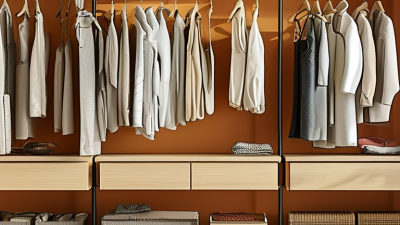
Wardrobe rails are horizontal supports that carry hanging garments inside a closet. They work by transferring the weight of clothing to side brackets, center supports, or telescopic mounting systems.

The chart compares indicative working-load benchmarks per 1 meter for common rail configurations. Actual capacity depends on rail thickness, mounting hardware, support spacing, wall construction, and installation quality. Oval and stainless-steel rails are generally preferred for heavier garments, while aluminum rails are lighter and more suitable for moderate loads.

Which Wardrobe Rail Types Are Available in 2026?

In 2026, wardrobe rail options cover more than the familiar straight metal bar. Standard round rails remain common for shirts, jackets, and light dresses. Oval rails can reduce twisting when properly supported. Square-profile rails offer a modern appearance, but their corners may catch delicate fabrics. Steel, aluminum, and reinforced plastic are widely available, with different strengths, finishes, and price levels.

Adjustable wardrobe rails suit changing cabinet widths and rental interiors. Telescopic rails are useful for narrow spaces, although their joints require careful load testing. Pull-out rails improve access inside deep wardrobes. Pull-down rails serve high storage areas, especially when users cannot reach the upper section comfortably. Corner rails, sliding rails, and double-level rails help convert awkward layouts into usable hanging space. Some advanced systems include soft-closing movement or integrated lighting.

I have inspected installations where a strong rail failed because the wall anchors were weak. The rail was not the real problem. Buyers should check span length, bracket spacing, material thickness, corrosion resistance, and declared load capacity. Local cabinet dimensions and installation surfaces also matter. A rail rated for one mounting method may perform poorly with another. I prefer suppliers who provide test data, installation drawings, and replacement hardware. Specifications can still be incomplete. That is worth questioning before a large international order. Clean finishes look attractive, but fingerprints and scratches may appear quickly in daily use.

How Do Materials and Finishes Affect Rail Performance?

For global wardrobe buyers, rail performance depends more on material and finish than appearance alone. Steel rails provide strong load capacity for heavy coats and storage baskets. Aluminum rails are lighter, but they may bend under concentrated loads. Stainless steel suits humid rooms because it resists rust more effectively. Yet, it usually costs more.

Finish changes daily use. Powder coating creates a durable surface and helps protect steel from scratches and moisture. Poor surface preparation can still cause peeling near cut edges. Chrome plating offers a smooth, bright finish with low friction. However, damaged plating may expose the metal underneath. Anodized aluminum resists surface wear, although its color can vary between production batches. Dark finishes can also show dust more clearly.

Small details matter. Check wall thickness, rail diameter, bracket strength, and supported load together. A thick rail with weak brackets remains unsafe. Request load-test data, coating thickness, corrosion testing, and dimensional tolerances from the supplier. Test samples in realistic conditions, including humidity, temperature changes, and repeated sliding. Do not trust appearance alone.

One practical mistake is choosing the heaviest material automatically. Weight can increase shipping costs and complicate installation. A lighter rail may perform better when its brackets are properly spaced. The right choice is not always perfect. It depends on room climate, garment weight, cleaning habits, and installation quality.

2026 Best Wardrobe Rail Types for Global Buyers? – How Do Materials and Finishes Affect Rail Performance?
Rail Material Common Finish Typical Outside Diameter Typical Maximum Unsupported Span Indicative Distributed Load Capacity Corrosion Resistance Key Performance Effect Recommended Applications
Carbon Steel Electroplated chrome, nickel-chrome, or powder coating 25–32 mm 800–1,200 mm with center support 30–60 kg per metre Medium; depends strongly on coating quality and edge protection High stiffness and good resistance to bending; heavier than aluminum General household wardrobes and medium-to-heavy clothing loads
Stainless Steel 304 Brushed, satin, mirror-polished, or PVD decorative coating 25–32 mm 900–1,300 mm with center support 35–65 kg per metre High resistance to humidity and common household corrosion Strong, durable, and suitable for humid environments; higher material cost Bathrooms, coastal regions, premium interiors, and long-service installations
Stainless Steel 316 Brushed, satin, or polished 25–32 mm 900–1,300 mm with center support 35–65 kg per metre Very high resistance to chlorides and marine humidity Improved resistance to salt exposure compared with grade 304; usually more expensive Marine climates, high-humidity projects, and luxury architectural interiors
Aluminum Alloy Anodized, powder coated, or electrophoretic coated 25–32 mm 600–1,000 mm with center support 20–45 kg per metre High when anodized or properly powder coated Lightweight and corrosion resistant; lower stiffness than steel at the same diameter Modular furniture, flat-pack wardrobes, lightweight systems, and export projects
Zinc Alloy Chrome plating, nickel plating, or powder coating 20–30 mm 500–900 mm with center support 15–35 kg per metre Medium to high when plating is continuous and undamaged Good surface appearance and dimensional stability; generally heavier than aluminum Decorative wardrobe systems and short-span applications
Solid Hardwood Clear lacquer, oil, wax, or water-based coating 25–40 mm 600–1,000 mm with center support 20–40 kg per metre Low to medium; moisture protection is essential Warm appearance and good rigidity when properly seasoned; can expand or contract with humidity Traditional furniture, luxury interiors, and design-led wardrobes
Steel with Powder Coating Thermoset polyester or epoxy-polyester powder coating 25–32 mm 800–1,200 mm with center support 30–60 kg per metre High in indoor use when the coating is continuous Provides color flexibility, impact protection, and improved resistance to ordinary indoor humidity Color-matched furniture, retail interiors, and modern residential wardrobes
Steel with Chrome Plating Decorative nickel underlayer with chromium top layer 25–32 mm 800–1,200 mm with center support 30–60 kg per metre Medium to high indoors; scratches can expose the base metal Hard, reflective surface with good abrasion resistance and a bright metallic appearance Classic wardrobes, hotel furniture, and polished decorative interiors
Steel with Electrophoretic Coating Electro-deposition primer with optional topcoat 25–32 mm 800–1,200 mm with center support 30–60 kg per metre High when coverage is uniform, including recessed areas Improves coating coverage and corrosion protection on complex or tubular surfaces High-volume production, concealed rails, and projects requiring consistent coating coverage
Interpretation note: Load figures are indicative engineering ranges for straight rails carrying evenly distributed clothing loads. Actual capacity depends on rail diameter, wall thickness, alloy or steel grade, bracket spacing, fasteners, support conditions, and cabinet construction. A center bracket is recommended for long spans and heavy loads.
Technical basis: Material and finish characteristics are based on commonly used engineering properties of carbon steel, stainless steel, aluminum alloys, zinc alloys, hardwood, powder coatings, electroplated coatings, anodized finishes, and electrophoretic coatings. Buyers should verify load performance through product-specific testing and applicable local standards.

How Should Global Buyers Compare Wardrobe Rail Quality?

Global buyers should compare wardrobe rail quality through measurable performance, not attractive photographs. Start with the material and wall thickness. Steel rails usually support heavier clothing, while aluminum offers lighter handling and strong corrosion resistance. However, alloy quality and manufacturing accuracy can vary widely.

Check the rail’s load rating under realistic conditions. A wardrobe holding winter coats needs more strength than one storing shirts. Ask whether testing used a centered load or uneven weight. Uneven loading exposes weak brackets quickly.

Examine welds, joints, end caps, and screw holes. Clean welds usually show better control, but appearance alone cannot prove durability. Measure twice.

Surface protection also matters. Compare coating thickness, edge coverage, and resistance to humidity. In coastal homes, untreated steel may develop rust around cut edges. Request test reports, material specifications, and inspection records from the supplier. Reliable documents should identify test methods and sample conditions. Vague claims deserve caution.

Installation details can change the result. A strong rail may still bend when brackets are widely spaced or poorly fixed.

Check bracket spacing, fastener compatibility, and the cabinet panel thickness. I once trusted a high load rating and overlooked weak mounting screws. That was a costly lesson.

My inspections are not infallible, so independent sampling remains valuable. A small physical test can reveal looseness, noise, or coating damage before a large order.

What Installation and Market Standards Should Buyers Check?

For global buyers, wardrobe rail selection starts with installation and market standards, not appearance alone. Check the rail’s declared load capacity, material grade, corrosion resistance, and testing method. A rail holding winter coats needs stronger support than one used for shirts. Ask suppliers for technical drawings, dimensional tolerances, and test reports from recognized laboratories. These documents make comparisons more reliable.

Installation details can decide long-term performance. Confirm whether the rail fits wooden panels, masonry walls, or metal frames. Each surface requires suitable anchors and screws. Measure the cabinet width twice. A small error may create bending, noise, or uneven doors. For export projects, review local requirements for product safety, packaging, labeling, and chemical restrictions. Standards differ between regions. Do not assume one certificate covers every destination.

Tips: Request a sample before bulk production. Test the rail with realistic clothing weight for at least several days. Inspect screw holes, end caps, surface coating, and movement after repeated use. Leave enough clearance for hangers and sliding doors. Clear instructions matter.

One practical concern is often missed: installers may replace supplied fasteners with cheaper ones. That can weaken the entire system. Specify approved hardware and installation steps clearly. I would also record site conditions, because humidity and wall quality can change results. A perfect laboratory test cannot fully represent every home. Some specifications may still need review after field feedback.