Home hardware manufacturer 18+ years

  • Facebook
  • linkedin
  • TikTok
  • youtube
  • Twitter
Leave Your Message

What Is a Pneumatic Cabinet Door Lift Wardrobe Tube Support?

A Pneumatic Cabinet Door LiftWardrobe Tube Support is a compact hardware system designed to hold, guide, and gently lift cabinet doors or wardrobe panels. It uses compressed gas inside a sealed tube, usually supported by brackets and connected to the moving door. When the panel opens, the pneumatic force assists the user. When it closes, controlled resistance helps reduce sudden movement.

It looks simple.

In practice, correct sizing matters. Door weight, panel width, opening angle, hinge position, and installation space all affect performance. A support that is too weak may let the door fall. One that is too strong may make closing difficult or strain the hinges. Cabinet hardware specialist Michael Reiss explains, “A lift system should support the door quietly, predictably, and repeatedly.” This practical view reflects what installers often see on site.

Quality also depends on the tube finish, end fittings, mounting alignment, and cycle durability. A clean, level installation can prevent binding and uneven pressure. Dust around the brackets should not be ignored. Small alignment errors can become noticeable after repeated use.

The Pneumatic Cabinet Door LiftWardrobe Tube Support may suit overhead kitchen cabinets, storage cupboards, and wardrobe compartments. However, it is not a universal solution. Each application needs careful measurement and testing. Product descriptions sometimes sound clearer than real installations. That is worth questioning.

A reliable introduction should therefore explain both its convenience and its limits. Users need to understand how the mechanism works, where it fits, and why professional selection improves safety, comfort, and service life.

What Is a Pneumatic Cabinet Door Lift Wardrobe Tube Support?

Definition and Purpose of a Pneumatic Cabinet Door Lift Wardrobe Tube Support

A pneumatic cabinet door lift wardrobe tube support is a gas-assisted hardware mechanism for upward-opening cabinet doors. It uses a sealed cylinder, pressurized gas, and a connecting tube or rod. When the door rises, gas pressure helps carry part of its weight. The support then holds the door open and controls its closing speed. This is the practical meaning behind the term.

Its purpose is simple: reduce lifting effort, limit sudden movement, and improve access inside tall wardrobes or overhead cabinets. A correctly selected support should match the door’s weight, width, opening angle, and hinge position. Too much force can make the door difficult to close. Too little force may cause dropping. Small details matter.

Grand View Research valued the global furniture market at about 516.66 billion dollars in 2022 and forecast a 5.2% annual growth rate through 2030. This expansion increases demand for compact, reliable cabinet hardware.

The Freedonia Group also identifies storage furniture and space-saving designs as important market trends. However, market growth does not guarantee good installation.

A support may feel smooth but still be incorrectly sized. I have seen doors stay open in testing, then sag after repeated cycles. Mounting plates need firm material, accurate alignment, and regular inspection. The tube should remain clean and free from dents. Pneumatic pressure is not a substitute for careful design.

Main Components and How the Gas-Spring Lifting Mechanism Works

A pneumatic cabinet door lift, often called a wardrobe tube support, combines several simple parts. The main components include a steel or composite tube, a piston rod, sealed gas cylinder, mounting brackets, ball joints, and fixing screws. Some designs also include damping oil for smoother movement. Each part must match the door’s weight, width, and opening angle. A weak support may drop suddenly. An oversized one can make the door difficult to close.

Inside the cylinder, compressed nitrogen pushes against a piston. When the wardrobe door opens, the piston rod extends and assists the lifting motion. As the door closes, the rod moves inward and compresses the gas again. Internal oil can slow the final movement, reducing slamming and vibration. The brackets transfer this force into the cabinet panels, so their position matters greatly. A few millimeters can change the operating feel.

A practical installation check is simple. Open the door slowly and watch for twisting, uneven gaps, or resistance. The support should help, not fight the user. This point is easy to miss. Actual performance can differ from the calculation because hinges, temperature, and door balance also matter. I would recheck the mounting angle after several uses, since early adjustments sometimes reveal the real problem. Keep fingers clear during testing, and replace damaged cylinders rather than attempting uncertain repairs.

Common Applications in Wardrobes, Cabinets, and Overhead Storage

What Is a Pneumatic Cabinet Door Lift Wardrobe Tube Support?

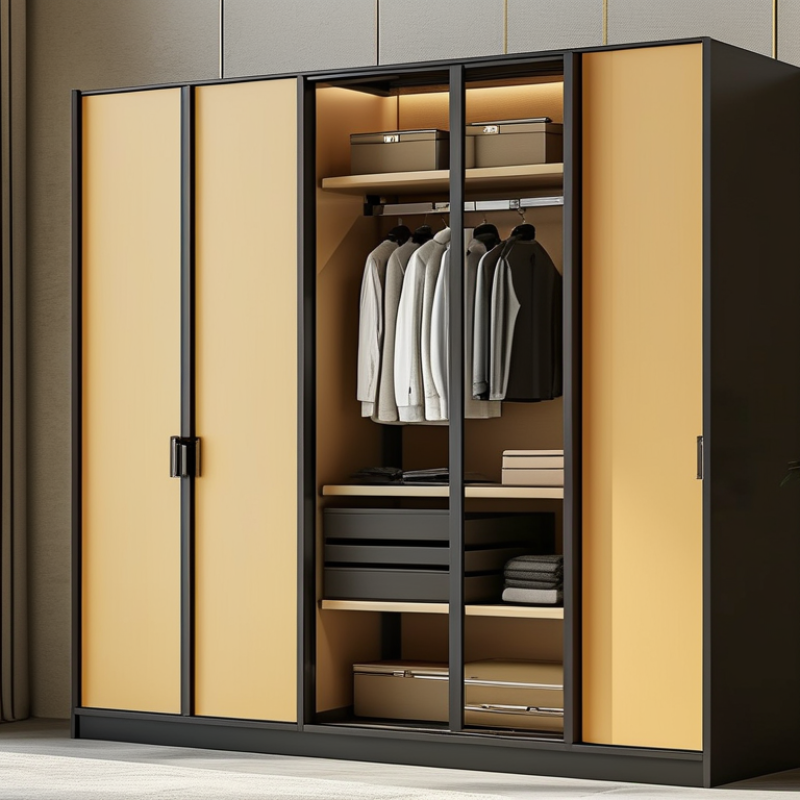
In wardrobes, cabinet doors, and overhead storage, a pneumatic lift support controls upward movement. It helps a heavy door open smoothly and remain lifted. The mechanism usually combines a gas-filled cylinder, mounting brackets, and a metal tube or connecting arm. In daily use, the tube distributes force across the door, reducing sudden drops and hinge stress.

The application is practical. A wardrobe lift can bring upper clothing rails closer to hand level. In kitchen cabinets, lift supports keep doors above eye level without swinging outward. Overhead compartments in offices, vans, and compact apartments also benefit from controlled opening. According to Grand View Research, the global furniture market was valued at about USD 516.66 billion in 2022, with space-efficient furniture identified as a strong growth area. That trend supports demand for compact storage hardware.

Safety depends on correct sizing.

Door weight, panel width, opening angle, and installation position all affect performance. A support that is too strong may make the door difficult to close. One that is too weak may allow a sudden fall.

It happens. The word “pneumatic” can also be imprecise, because many products use gas springs rather than compressed air systems. The U.S. Consumer Product Safety Commission emphasizes secure anchoring for storage furniture, especially where doors or compartments can shift. Regularly inspect screws, brackets, and cylinder leakage. Small details matter.

Key Factors for Selecting the Correct Tube Support

What Is a Pneumatic Cabinet Door Lift Wardrobe Tube Support? Key Factors for Selecting the Correct Tube Support

A pneumatic cabinet door lift uses compressed gas inside a tube to assist opening and holding a wardrobe door. Correct selection starts with door weight, width, hinge position, and opening angle. A support that is too weak will drop suddenly. One that is too strong may strain hinges and make closing difficult. It is a small component, but its force changes the whole user experience.

Industry furniture safety guidance, including EN 14749, emphasizes stability, secure fixing, and predictable movement. Gas-spring engineering references commonly recommend calculating required force from door weight and the distance between the door’s center of gravity and pivot point. Allow a practical safety margin, often around 10–20 percent, rather than selecting the exact calculated value. Temperature also matters. Technical data from major industrial gas-spring studies shows that force can vary with temperature, especially in unheated storage areas.

Material and cycle life deserve equal attention. A steel tube may suit heavier doors, while aluminum reduces weight but can require stronger mounting reinforcement. Check extended length, compressed length, end fittings, and corrosion resistance before ordering. My early selection mistake was focusing only on force. The mounting angle caused poor control. Measure twice. Test the actual door with temporary supports, then inspect screw pull-out and closing speed. Reports from furniture hardware testing laboratories also show that repeated-cycle performance can differ greatly from initial load results. That difference should not be ignored.

Installation, Adjustment, and Routine Maintenance Guidelines

What Is a Pneumatic Cabinet Door Lift Wardrobe Tube Support?

A pneumatic cabinet door lift uses a gas-filled tube to support an upward-opening wardrobe or cabinet door. Installation begins with accurate measurements. Check the door weight, width, opening angle, and available side clearance. A support that is too weak may drop suddenly. One that is too strong may make the door difficult to close.

Mount the cabinet bracket on a solid, level surface. Attach the door bracket according to the hinge position and the supplier’s fitting dimensions. Keep both sides symmetrical when using two supports. Uneven placement can twist the door frame. Use suitable screws for the cabinet material, then open and close the door slowly by hand. Never force the tube into position.

Adjustment should be gradual. If the door rises too quickly, the support may be oversized or positioned incorrectly. If it falls, inspect the fittings before replacing the tube. Do not drill, heat, or open a pressurized cylinder. That is unsafe. For routine maintenance, wipe dust from the rod with a soft, dry cloth. Check loose screws, cracked brackets, unusual noise, and oil leakage every few months. A light hinge lubricant may help, but keep lubricant away from the exposed rod. I still recheck alignment after seasonal cabinet movement. Small shifts matter. Replace damaged parts promptly, even when the door appears to work.

What Is a Pneumatic Cabinet Door Lift Wardrobe Tube Support? — Installation, Adjustment, and Routine Maintenance Guidelines

Category Item Typical Specification or Data Recommended Practice Inspection or Acceptance Criteria
Product Basics Operating principle Sealed gas spring or pneumatic lift tube containing pressurized gas and damping oil Use the support to assist opening, holding, or controlling the movement of an upward-opening cabinet or wardrobe door. The door should move smoothly without sudden dropping, binding, or excessive side movement.
Product Basics Common applications Overhead cabinets, wardrobe lift doors, storage compartments, and furniture flaps Select a support designed for the door orientation, available installation space, and required opening angle. The support must not interfere with shelves, hinges, wiring, or the cabinet frame throughout the full travel.
Sizing Support force Common furniture sizes range from approximately 50 N to 150 N per support Choose the force from the door mass, center of gravity, hinge position, support quantity, and mounting geometry. Follow the component supplier's force chart when available. When correctly sized, the door remains stable at the intended open position and can be closed with moderate, controlled effort.
Sizing Load distribution Two supports are often used on wider or heavier doors Install paired supports symmetrically where the door width or mass could twist the panel or overload one side. Both sides should extend and compress at a similar rate; uneven movement indicates misalignment, unequal loading, or wear.
Sizing Mounting geometry Bracket spacing and angle are application-specific; do not copy a universal dimension Use the supplied mounting drawing or determine the geometry by checking the closed, intermediate, and fully open positions before drilling. The tube must not reach its mechanical stop before the door reaches its intended position.
Installation Pre-installation checks Confirm door mass, hinge condition, cabinet material, support force, stroke length, and overall extended length Repair loose hinges, damaged panels, or weak fixing areas before installing the pneumatic support. The cabinet structure should remain rigid, and all mounting screws should have adequate engagement in the substrate.
Installation Bracket positioning The cabinet-side and door-side brackets must be aligned with the support's pivot axis Mark both brackets with the door supported. Drill pilot holes suitable for the fastener size and cabinet material. Bracket plates should sit flush without rocking, splitting the panel, or contacting the support body.
Installation Fastening Use fasteners compatible with wood, metal, or composite cabinet construction Tighten firmly without stripping the panel. Use reinforcement plates or through-fasteners when the substrate is thin or weak. There should be no movement at the bracket after several complete opening and closing cycles.
Installation Orientation Many gas springs are installed with the piston rod downward when the door is closed, unless the instructions state otherwise Follow the component's specified orientation to help retain damping oil near the seal and reduce seal wear. The support should operate without scraping, twisting, or contact between the rod and surrounding hardware.
Adjustment Opening resistance Resistance depends mainly on rated force and lever position; it is not normally adjusted by changing gas pressure If the door is hard to open, verify geometry, hinge friction, and support force before replacing the unit. Do not puncture or refill a sealed gas spring. The door should open progressively and remain supported without needing excessive manual force.
Adjustment Closing speed Some pneumatic supports provide fixed damping; adjustable models may use a small damping control For an adjustable model, make small changes according to its instructions and test the complete door movement after each change. The door should close in a controlled manner without slamming or stopping before the latch engages.
Adjustment Alignment correction Typical symptoms include rubbing, uneven gaps, noise, and unequal extension Loosen and realign brackets only while supporting the door. Correct hinge alignment before changing the support position. Door gaps should be even, and the support should remain free from lateral bending during operation.
Safety Door support during service A gas spring is not a substitute for a temporary mechanical prop during installation or repair Secure the door with a prop or second person before removing brackets, hinges, or a support. The door must remain stable if the pneumatic support is disconnected.
Safety Pressure and damage control Pressurized cylinders must not be drilled, cut, heated, crushed, or opened Replace a leaking, bent, corroded, or dented support. Dispose of failed units according to local metal and pressurized-component requirements. No oil film, gas leakage, severe corrosion, rod pitting, or deformed end fitting should be present.
Routine Maintenance Cleaning Inspect at least every 6–12 months in normal indoor furniture use Wipe dust and spills from the cylinder, piston rod, brackets, and hinge area with a soft, dry or slightly damp cloth. The piston rod should remain clean and free of abrasive particles.
Routine Maintenance Lubrication Most sealed gas springs do not require routine internal lubrication Do not apply grease or oil to the exposed piston rod unless the instructions specifically permit it. Lubricate hinges separately when appropriate. The rod seal area should not collect sticky lubricant, dust, or grit.
Routine Maintenance Fastener inspection Check screws and pivot connections every 6–12 months, or more often under frequent use Retighten loose fasteners and replace stripped screws, cracked brackets, or worn clips with compatible parts. There should be no looseness, clicking, elongation of mounting holes, or movement at the pivot joints.
Routine Maintenance Operating-cycle check Perform 5–10 complete open-and-close cycles after installation and after any adjustment Observe movement, gap alignment, support synchronization, latch engagement, and unusual sound. The door should complete its travel consistently without binding, bouncing, or dropping.
Replacement Replacement indicators Door drift, reduced lifting assistance, uncontrolled closing, leakage, corrosion, or bent rod Replace the support with one matching the original extended length, stroke, end fittings, mounting orientation, and required force. Replace paired supports together when their force or movement is noticeably different.
Troubleshooting Door will not stay open Possible causes: insufficient force, incorrect bracket geometry, excessive door mass, or worn support Check the mounting points and door mass first; then compare the installed support rating with the required application rating. Do not increase force by modifying the cylinder. Use a correctly rated replacement.
Troubleshooting Door slams closed Possible causes: failed damping, incorrect orientation, loose mounting, or hinge friction imbalance Support the door, inspect the rod and brackets, verify orientation, and replace the unit if damping or gas pressure has been lost. Closing should be controlled across the final part of the travel, with no impact at the cabinet frame.

Important: Force ratings, dimensions, mounting positions, and adjustment methods vary by cabinet design and component specification. Always verify the actual support instructions and ensure the door is mechanically secured before servicing.