A Cabinet Door Lift Support is a compact mechanism that helps an upward-opening cabinet door rise, stay open, and close with controlled movement. It may use a gas spring, friction hinge, or mechanical counterbalance. Inside the fitting, stored force offsets part of the door’s weight. The result is practical: less hand pressure, fewer sudden drops, and easier access to the cabinet interior.
This subject matters as modern kitchens use wider doors, heavier wood panels, glass inserts, and integrated appliances. Grand View Research’s Cabinet Hardware Market report links market growth with residential construction, remodeling, and demand for functional fittings. Research and Markets’ Cabinet Hardware Global Market Report also identifies furniture upgrades and improved usability as important market drivers. However, these reports generally group lift supports within broader cabinet hardware categories. Their figures should not be treated as exact sales data for lift mechanisms. That limitation deserves attention.
Blum founder Julius Blum expressed the hardware principle clearly: “The quality of motion is the decisive factor in the use of furniture.” The statement fits lift supports closely. A reliable support should match door weight, height, hinge position, and opening angle. Too much force can make the door difficult to close. Too little force can create a harsh drop. Installation details matter.
Small errors become obvious. A door may drift upward, scrape the frame, or stop unevenly. The calculation may look correct, yet real cabinets contain friction, misalignment, and changing loads. This guide explains how a Cabinet Door Lift Support works, how to select one, and where installation judgments can still fail.
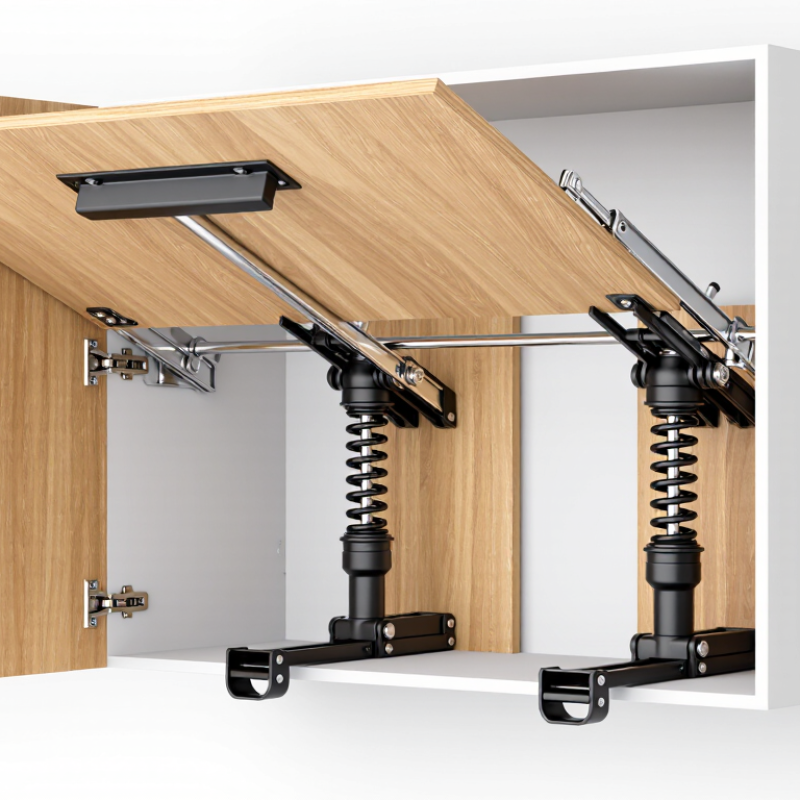
A cabinet door lift support is a hardware mechanism that helps an upward-opening door move smoothly. It connects the cabinet side to the door panel, usually near the hinge area. When you raise the door, the support assists the movement and holds the panel open. When you close it, the mechanism slows the descent. This reduces sudden drops, trapped fingers, and stress on the hinges.
Common lift supports use a gas spring, friction arm, or spring-assisted joint. Each design creates controlled resistance in a different way. A gas spring contains pressurized gas inside a sealed cylinder. Its force should match the door’s weight and size. An incorrectly selected support may feel weak, stiff, or unstable. In real installations, door material and hinge position can change performance. I have seen a support work well on a light wood door but struggle with thicker panels. That detail is easy to overlook.
Tips: Measure the door before choosing a lift support. Check its height, width, thickness, and approximate weight. Install both supports at matching positions when the door is wide or heavy. Tighten every fastener firmly, but avoid damaging the cabinet material. Test the door slowly several times. If it drops, twists, or stops unevenly, review the mounting points. Sometimes the problem is not the support itself.
A cabinet door lift support uses a spring, gas strut, or friction mechanism to assist an upward-opening door. It carries part of the door’s weight. When the door rises, the support extends and produces lifting force. A gas model contains compressed gas inside a sealed cylinder. The gas pushes against a piston rod, helping the door stay open. As the rod extends, its force usually changes slightly. Mounting angle changes the result. That detail matters.
A correctly positioned support lifts the door smoothly without forcing it upward. As the door closes, the support compresses and controls part of the movement. Some models damp the final closing action. Others only resist the door’s weight.
During practical fitting work, the support should match the door’s weight, width, and opening angle. Mounting points also affect performance. If the force is too low, the door may fall unexpectedly. If it is too high, the door can strain hinges or mounting screws.
Cabinet material matters as well. Thin panels may need reinforced fixing points. I have found that small position changes can improve movement more than stronger hardware. Still, calculations are not always exact. Real friction, uneven doors, and worn hinges can change the result.
Test the door slowly before regular use. Recheck loose screws and unusual resistance.
A cabinet door lift support helps an upward-opening door rise smoothly and remain open. It reduces the force needed at the handle and limits sudden closing. The support transfers part of the door’s weight to the cabinet frame. Correct positioning also keeps hinges from carrying excessive stress.
The most common type is the gas lift support. It uses compressed gas inside a cylinder and usually provides controlled, steady movement. A spring lift support uses a coiled spring and offers a simpler mechanical design. It may feel less smooth, especially with heavier doors. Friction stays hold the door at different angles through resistance at a pivot joint. They suit lighter doors and installations requiring flexible positioning. Folding stays use linked arms that guide the door through a fixed path. Electric lift systems add motorized opening and are useful for high, hard-to-reach cabinets.
Not every support fits every door. A technician should check door weight, width, opening angle, and hinge position before choosing a force rating. A support that is too strong can make closing difficult. One that is too weak may let the door fall. Small details matter. I have found that mounting distance often affects performance more than expected. Temperature can also change gas pressure slightly. Even careful calculations can miss real-world friction, so testing the installed door remains important. A smooth first movement does not always mean long-term reliability. Fasteners, brackets, and cabinet material need regular inspection, especially in busy kitchens.
A cabinet door lift support assists with opening, holding, and controlled closing. The chart shows the ideal gravitational force created by cabinet doors of different masses. In practice, the required support rating also depends on the door’s size, center of gravity, hinge position, opening angle, and the number of supports used.
Uses compressed gas to provide lifting assistance and damping during movement.
Uses friction to hold a door at selected positions and reduce uncontrolled movement.
Stores mechanical energy in a spring to counterbalance part of the door’s weight.
Uses a motorized actuator for powered opening, closing, and position control.
The chart uses the physical relationship F = m × g, with gravitational acceleration g ≈ 9.81 m/s². These values represent force caused by mass alone, not the final hardware rating.
A cabinet door lift support helps hold an upward-opening door in a controlled position. It usually uses a gas spring, friction mechanism, or spring-loaded arm. When you lift the door, the support reduces the effort and guides its movement. When closing, it slows the door and helps prevent sudden drops. This protects fingers, hinges, and the cabinet frame.
Start by measuring the door’s weight, width, height, and opening angle. A heavier door needs stronger support, but excessive force can stress the hinges. Check the manufacturer’s force rating and compare it with the door’s actual weight. Mounting points also matter. A small change in position can affect lifting performance noticeably. Confirm that the support fits inside the cabinet without touching shelves or stored items. For wide doors, two supports may provide better balance. I have found that measuring twice prevents many installation problems. Still, real-world alignment can differ slightly from the diagram.
Tips: Open the door slowly during testing. It should rise smoothly and remain stable. If it slams, feels weak, or twists sideways, stop and reassess the force rating and mounting position. Use sturdy screws suited to the cabinet material. Thin panels may need reinforcement behind the mounting plate. A softer closing action is often worth choosing, especially in kitchens used every day. Test the door several times before loading the cabinet. Small adjustments can improve comfort.
A cabinet door lift support uses controlled resistance to hold an upward-opening door in place. It reduces the door’s weight during opening and helps prevent sudden drops. Before installation, measure the door and check its weight against the support’s rated capacity. Remove stored items from the cabinet. Keep the door fully supported while working, because hinges alone may not hold it safely.
Open the door to the intended angle and position the support according to its installation guide. Mark every screw hole carefully, then drill small pilot holes to reduce wood splitting. Attach the cabinet-side bracket first, followed by the door-side bracket. Do not overtighten the screws. The support should move smoothly without forcing the door sideways. A second person can hold the door steady during this step. It makes alignment easier.
Check the lift support every few months. Wipe away dust, inspect the screws, and look for bent brackets, loose joints, or leaking cylinders. Tighten loose hardware gently. Do not apply oil unless the instructions specifically allow it, since oil may damage internal seals or attract grit. If the door drops, feels uneven, or stops at the wrong angle, stop using it and reassess the support size and mounting position. Small alignment corrections often help, but replacing a worn support is safer than compensating with extra force.
| Data Dimension | Practical Information | Installation and Maintenance Guidance |
|---|---|---|
| Basic Definition | A cabinet door lift support is a mechanical device that assists with opening, holding, and controlling an upward-opening cabinet door. | Choose a support designed for the door style, dimensions, weight, and available mounting space. |
| Primary Operating Principle | When the door opens, the support generates an assisting force that reduces the effort required to lift the door and helps keep it in an open position. | The support must be installed at the correct angle and pivot locations so that the force is applied smoothly throughout the door movement. |
| Common Support Types | Common designs include friction stays, spring-loaded supports, gas-spring supports, and controlled or soft-closing lift mechanisms. | Friction and spring mechanisms are generally simple to inspect. Gas springs and damped mechanisms should be checked for loss of force, leakage, or abnormal resistance. |
| Typical Door Applications | Lift supports are used with horizontal-up cabinet doors, overhead storage doors, display cabinets, appliance compartments, and other hinged panels. | Confirm that the door can open without contacting adjacent cabinets, walls, handles, lights, or nearby appliances. |
| Force Selection | The required support force depends on door weight, door height and width, center of gravity, hinge position, number of supports, and mounting geometry. | Do not select a support based on door weight alone. Follow the supplier’s force or size chart and use a matched pair when the design requires two supports. |
| Typical Construction Materials | Supports are commonly made from steel, stainless steel, aluminum, reinforced polymer components, or combinations of these materials. | Use corrosion-resistant hardware in kitchens, bathrooms, outdoor enclosures, or other areas with high humidity. |
| Key Components | Most systems include a support body, moving arm or piston rod, mounting brackets, pivot points, fasteners, and sometimes a damping mechanism. | Inspect brackets, pivots, and screws as well as the main support. A loose bracket can cause poor alignment or door drop. |
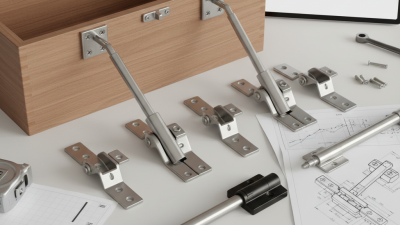
| Installation Tools | Typical tools include a measuring tape, pencil, drill, suitable drill bit, screwdriver or driver bit, level, and protective eyewear. | Use fasteners appropriate for the cabinet material. For particleboard or MDF, avoid stripped holes and use suitable reinforcement when necessary. |
| Installation Sequence | Measure the door and cabinet, mark the bracket locations, pre-drill where appropriate, attach the brackets, connect the support, and test the movement. | Support the door during installation. A second person can help prevent the door from falling or twisting while the brackets are being positioned. |
| Mounting Symmetry | Wide or heavy doors may require supports on both sides to distribute the load and reduce twisting. | Install both sides at matching heights and distances from the cabinet edges unless the installation instructions specify another arrangement. |
| Movement Test | A correctly installed support should open the door smoothly, hold it securely when intended, and avoid sudden slamming during closing. | Open and close the door several times. Check for rubbing, uneven movement, unusual noise, loose hardware, or excessive closing speed. |
| Adjustment | Some supports allow adjustment of friction, damping, or mounting position; others have a fixed force rating. | Make small adjustments and retest the door after each change. Do not modify a sealed gas spring or drill into its cylinder. |
| Routine Cleaning | Dust, grease, and food residue can accumulate around brackets, pivots, and moving arms. | Wipe the support with a soft, slightly damp cloth and dry it afterward. Avoid abrasive cleaners and prolonged exposure to water. |
| Lubrication | Metal pivot points may require occasional lubrication, depending on the support design and service instructions. | Use only a compatible light lubricant on exposed pivots. Do not lubricate a gas-spring piston rod unless the manufacturer specifically permits it. |
| Inspection Interval | Inspection frequency depends on usage, door weight, environment, and operating conditions. | Check the support and mounting hardware at least periodically and inspect sooner if the door is used frequently or begins to move differently. |
| Common Warning Signs | Warning signs include door sagging, sudden closing, reduced lifting assistance, squeaking, loose screws, bent brackets, corrosion, or visible gas leakage. | Stop using the cabinet if the door cannot be held safely. Replace damaged or weakened components rather than relying on temporary repairs. |
| Safety Precautions | A failed or incorrectly sized support can allow a door to fall unexpectedly and may cause injury or cabinet damage. | Keep hands clear of pinch points, secure the door during servicing, and replace supports in pairs when both sides are the same age or show similar wear. |
| Replacement Criteria | Replacement is appropriate when the support loses force, leaks, bends, corrodes significantly, develops excessive play, or no longer controls the door safely. | Record the original mounting locations and verify the replacement force, dimensions, connection type, and opening angle before installation. |
| Expected Service Life | Service life varies widely with construction quality, cycle frequency, door load, humidity, temperature, and installation accuracy. | Use operating cycles and environmental conditions, rather than a fixed calendar period alone, to plan inspections and replacement. |